

Everything You Ever Wanted to Know About Pet Rabbits
In today's fast-paced modern life, keeping pets has become a popular choice for many to relax and seek companionship. Among them, rabbits, with their adorable appearance and docile temperament, are increasingly gaining popularity. If you are also interested in keeping a rabbit, or are curious about their lifestyle, please allow me to share some knowledge and care tips about rabbits to help you better understand and care for them.

The Most Unusual Pets People Keep Around the World
When it comes to pets, most people first think of cats, dogs, rabbits, or goldfish. However, due to differences in cultural traditions, living environments, and legal regulations, the variety of animals kept as pets is far richer than imagined. From gliding mammals to birds with remarkable learning abilities, and even uniquely shaped reptiles, different countries have their own "alternative pet culture." For many animal lovers, these special pets are not only a source of novelty but also allow them to rediscover the rich and diverse relationship between humans and animals. In recent years, with the development of social media, more and more unusual pets have come into the public eye. However, it's important to note that not all animals are suitable as family pets. Some species require special living environments, professional care, and may even be protected or restricted by local laws. Therefore, while learning about these animals, it's crucial to respect wildlife protection regulations and avoid blindly following trends. Let's take a look at some amazing pets from around the world.

What Your Dog's Breed Says About Its Personality
Dogs, as one of the earliest domesticated animals, have become one of humanity's closest companions due to their loyalty, intelligence, and adaptability. However, different breeds of dogs exhibit distinctly different personality traits. First, it's important to understand the close relationship between breed differences and personality traits. Dog breeds have undergone human selection during evolution to adapt to different uses and environments. Therefore, different breeds exhibit significant differences in morphology, intelligence, and behavior. For example, intelligent breeds such as Border Collies, Golden Retrievers, or Labrador Retrievers can reach the intelligence level of a 7- or 8-year-old child. This means they not only possess high learning and problem-solving abilities but also complex emotional needs. Understanding these psychological characteristics helps us better connect with them emotionally and provide them with a suitable living environment.

Why Some Dog Breeds Live Longer Than Others
As our lives improve, we demand more from our emotional and psychological well-being. Pets, being kind, gentle, and adorable, not only bring joy but also reduce many illnesses. However, whenever friends are considering getting a pet, I always remind them to be prepared: most pets have much shorter lifespans than humans, so we usually have to part with them. Therefore, if you cannot bear the pain of separation, you should carefully consider getting a pet. Since parting with a pet is so painful, how long do common pets typically live?
10 Animal Behaviors That Scientists Can Finally Explain
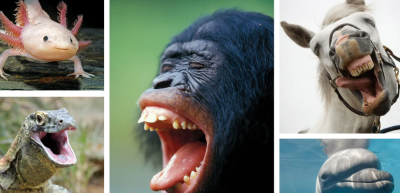
Animals often exhibit behaviors that baffle us: Why do dogs always circle before lying down? Why do cats suddenly run around wildly at night? Why do birds fly in neat formations? In the past, these behaviors were often considered mere "habits" and even given various mysterious explanations. However, with the development of ethology, neuroscience, and evolutionary biology, many of these once perplexing phenomena now have scientific basis. Research has found that most animal behaviors are not accidental but rather survival strategies developed over a long period of evolution. Some behaviors help them find food, some help them avoid danger, and others are closely related to socialization, reproduction, or health. Understanding these behaviors not only helps us better care for our pets but also allows us to rediscover the rich and complex world of animals. Below, let's look at 10 common animal behaviors that scientists have successfully explained.

Meet the Friendliest Dog Breeds in the World
A dog's "spirituality" isn't some mystical concept, but rather manifested in a series of concrete and perceptible behaviors. It combines high intelligence, strong empathy, and absolute loyalty, expressed as: gratitude, keen observation skills, exceptional learning and comprehension abilities, the ability to warn of danger in critical moments, and unwavering focus on its owner. Based on these standards, combined with globally recognized intelligence rankings, obedience, and feedback from numerous owners, Border Collies, Golden Retrievers, German Shepherds, Labrador Retrievers, Chinese Rural Dogs, Poodles, and Doberman Pinschers are undoubtedly among the most representative breeds.

10 Fascinating Facts About Cats Most Owners Don't Know
Cats, belonging to the Felidae family, are among the most widespread pets in households worldwide. The ancestors of domestic cats are believed to be the desert cats of ancient Egypt and the Persian cats of Persia, and they have been domesticated by humans for 3,500 years. Cats are one of the world's most popular pets, with over 600 million cats living in human households globally. However, cats also have many behaviors and characteristics that may surprise you. Let's learn about some interesting facts about cats!

The Surprising History Behind Some of the World's Favorite Pets
Today, pets have become important members of hundreds of millions of families worldwide. Whether it's a loyal dog, an elegant cat, a brightly colored parrot, or a lively rabbit, they not only accompany people in their daily lives but have also gradually become part of family culture. However, few people consider how these familiar pets originally entered human life. In fact, many of today's most popular pets have histories spanning thousands of years, once playing important roles in hunting, guarding, transportation, and even religious symbolism—a role quite different from that of modern family pets. With the development of archaeology and ethology, the process of pet domestication has gradually been revealed. From ancient civilizations to modern cities, the relationship between humans and animals has continuously evolved, shaping today's rich and diverse pet culture. Understanding the history behind these pets not only allows us to cherish their companionship more but also helps us understand some of their enduring instincts and behaviors.

The Hidden Meaning Behind Common Pet Behaviors
Pets can't speak, but they communicate with their owners daily through various behaviors. From a dog's constant tail wagging to a cat rubbing against your legs, rolling over, and kneading, to a rabbit suddenly stomping its paws and a bird preening its feathers, these seemingly ordinary actions actually convey different messages. Some behaviors represent happiness and trust, while others express stress, warnings, or physical discomfort. Learning to interpret these "body languages" not only helps owners better understand their pets but also allows them to detect their needs and health changes promptly. Animal behavior research shows that most pet behaviors stem from instinct, natural instincts, and communication methods developed through long-term domestication. While there are differences between breeds and individuals, many behaviors share common meanings. For pet owners, understanding these signals is more important than simply relying on experience. Below, let's look at some of the most common but often misunderstood pet behaviors.